

Autism Screening Event

TABLE OF CONTENTS




ACES is Opening a New Clinic in Bellevue, Washington
A partnership between ACES and KidsQuest Museum in Bellevue will bring more inclusivity opportunities to the local ASD community
ACES is excited to announce the opening of a new clinic in Bellevue, Washington. ACES will provide autism treatments at it's new clinic which is conveniently located by Sammamish High School, Odle Middle School, Stevens Elementary School and Crossroads Mall.
ACES is partnering with KidsQuest Children's Museum to offer screenings to the community. "KidsQuest Children's Museum has been key to fostering inclusivity for the Bellevue ASD community, and now ACES will contribute by offering autism screenings free of charge." "We are happy to open our doors in such a unique and inclusive city'" said Ashley Drag, Senior Vice President of Clinical Services and Innovation at ACES.
KidsQuest Museum is a space that brings joy, inclusiveness, and educational opportunities to families affected by ASD. The institution has been hosting low sensory events for five years now. At these Low Sensory Afternoons, KidsQuest tailors its exhibits, activities, and environment to the needs of children with various sensory challenges. The museum is located next to the public library in Downtown Bellevue.
ACES to Provide Free Autism Screenings September 17 at KidsQuest Museum
"Autism is a complex condition that can easily be missed, especially if childhood developmental milestones are being met," says Ashley Drag, Senior Vice President of Clinical Services and Innovation at ACES. For this reason, ACES is partnering with local businesses to provide free autism screenings in new communities.
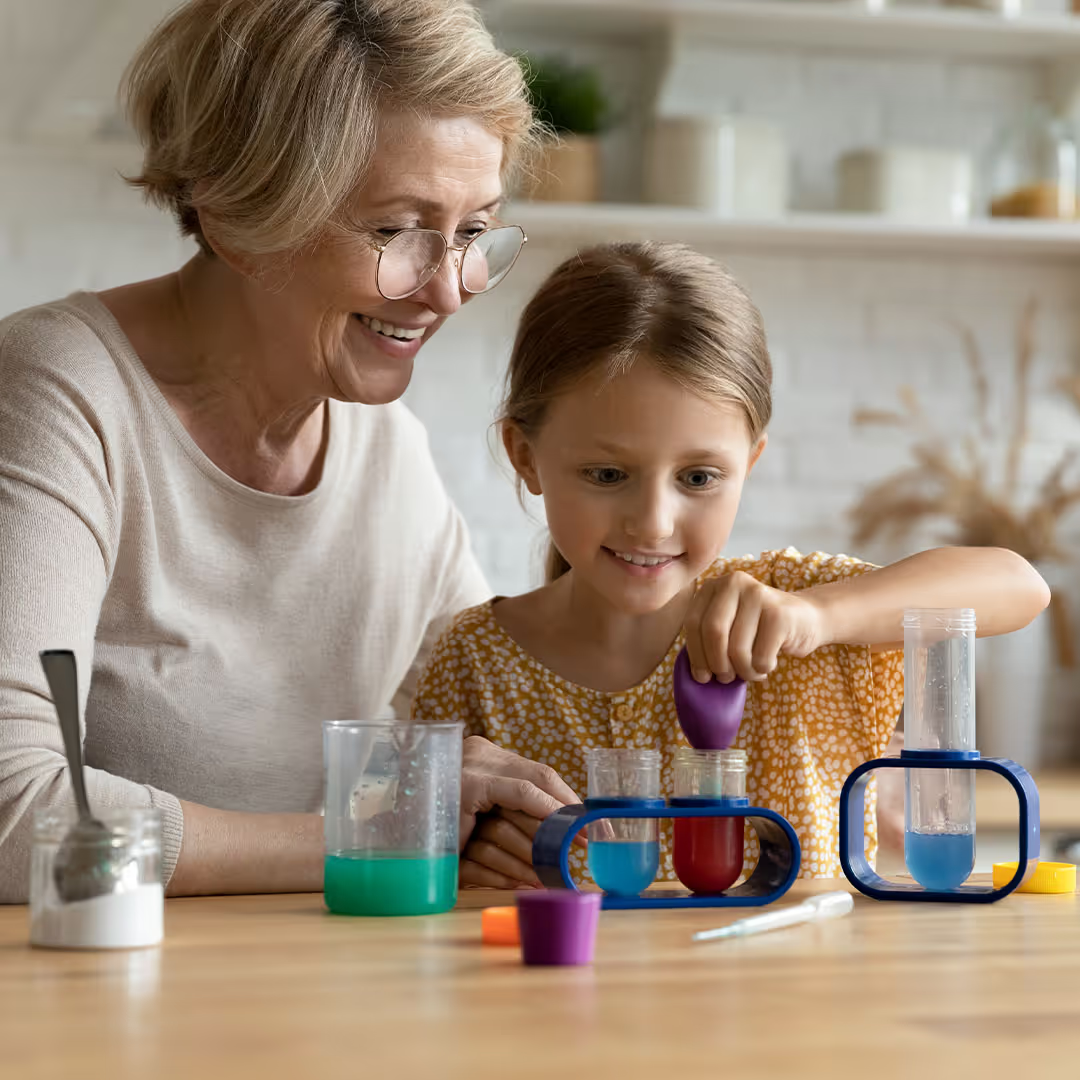
"These screenings are easy and can be done in 15 minutes or less through a conversation with the parent, a structured interview, and observation of the child," explains Ashley. The results will let parents know if further evaluation is needed and can provide specific talking points or red flags to discuss with your child's healthcare provider."
In 2021, the Adam Network reported that the average age of diagnosis was under 4.5 years old, with 30% of those who met the criteria not receiving a formal diagnosis until they were eight years of age. Research shows that early intervention and treatment at approximately age 2 increases overall IQ, language, and social skills. Some studies even suggest that treatment started at earlier ages offers better outcomes than treatment started later in life.
"Please do not wait if your intuition or gut tells you there is something wrong or something off; please visit us at the museum on September 17 from 1 to 5 pm for an autism screening. There is hope with screening and diagnosis of autism spectrum disorder," pleads Ashley. "If you have a concern, act early; it's the best advice I could ever give."
Sign-up to Meet with ACES at KidsQuest Children's Museum in Bellevue
To be notified of a future event please fill out the following form.
Low Sensory Afternoons at KidsQuest Children's Museum: A Chance to Play and Learn in a Low Stimuli Environment
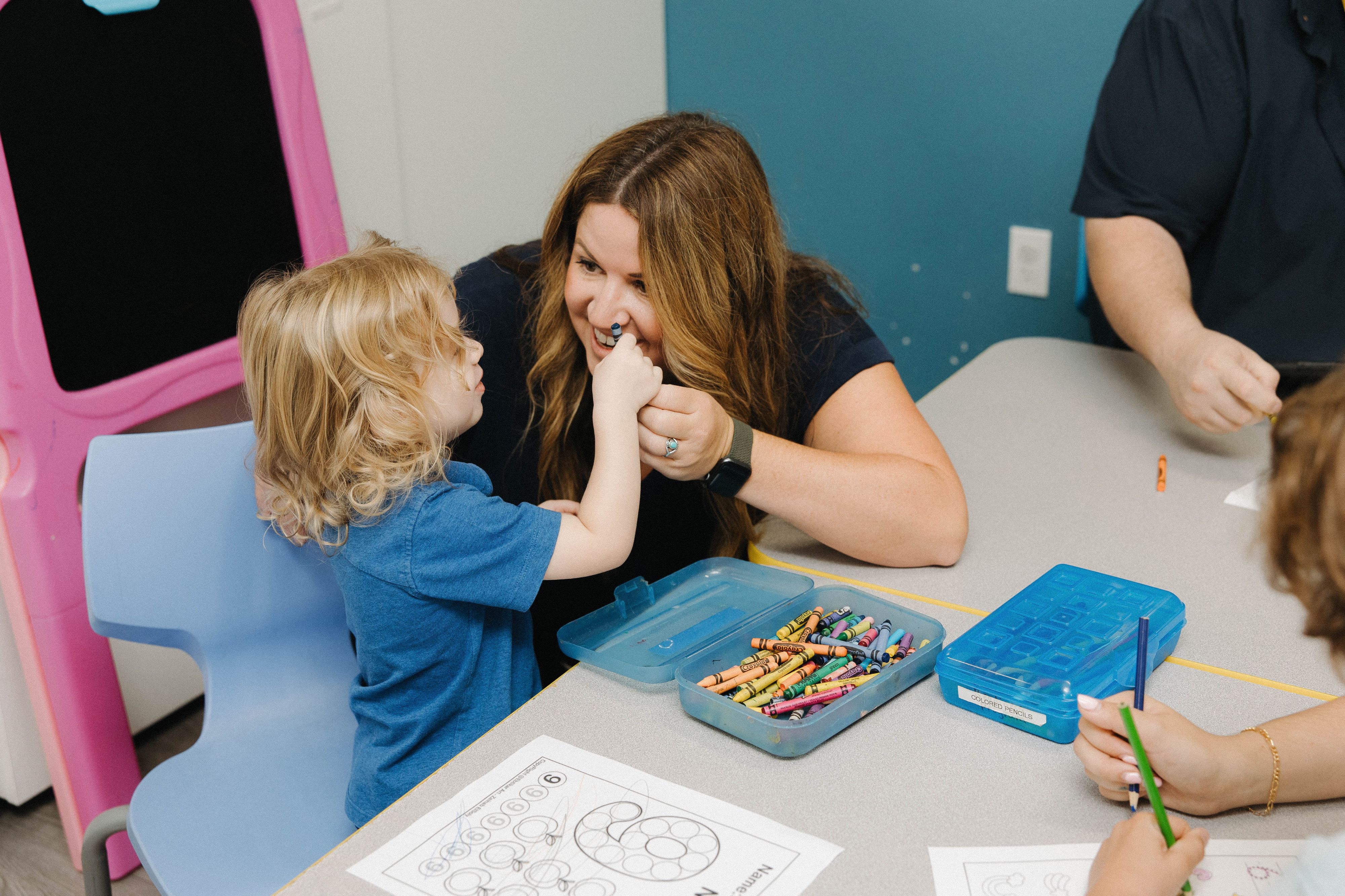
Interview with Catherine Garrett, Low Sensory Afternoon organizer.
ACES: We are thrilled to see an institution such as Kids Quest not only acknowledge the needs of the autistic community but respond to them. Can you tell us more about the Low Sensory Afternoons?
Catherine : The Low Sensory program happens every third Thursday of the month from 3 to 5 pm*. During this afternoon, we limit the museum's capacity, so it is much quieter than usual. We dim lights in some classrooms, avoid making PA announcements, and have fun, sensory-friendly activities.
ACES: Tell me a bit more about what happens there. What should I expect if I'm a mom of a child with sensory dysfunction?
Catherine: When you go to our website to register for the Low Sensory Afternoon, you'll see a storybook that will take you through your entire visit to Kids' Quest. It goes through the check-in process, the different exhibits, and the areas that might cause a sensory overload, such as the water exhibit or the truck room. We'll also have sensory bags right at the front of the museum with some headphones, toys, and sunglasses. Those are also available during regular museum hours.
ACES: What about the educational side of the museum and the exhibits?
Catherine: Well, at Kids Quest, we always say children learn through play, so we encourage every type of play possible. That is our mission. The impact can go from community engagement and social skills to those hard facts you learn in school, such as math, science, physics... There's a difference from sitting someone down and saying, this is how physics works, to come to our truck room where boxes are flying because you're spinning a wheel. There's cause and effect, which is the very basic way physics works.
We also have our story tree upstairs, full of books, puppets, costumes, different ways to tell stories and imagination; a play store; a beehive with live bees and worms… All the galleries focus on creativity and play; then, they go deeper into the learning impact and all that is listed up for parents to read, which is very cool. They enjoy that quite a lot.
ACES: What is the experience of walking into the museum like for the children?
Catherine: I've found that some kids will go directly into one room, stay there the entire time, and have the best time of their life. Others want to run around and go to every exhibit. Also, because there are other families with children with sensory issues, there's less judgment for behaviors such as meltdowns. It's just a safe, judgment-free zone for families to come in and truly play without any outside inhibitors, which is lovely.
ACES: I love that you shared that because I feel most of our families feel judged when they are in the world. The autistic community nowadays is asking for those spaces saying, Hey, we have always had to adapt to the world. We want to be included and to have spaces where they welcome us and where we don't have to adapt.
Catherine: Well, that also comes from our staff; we go through multiple pieces of training to communicate with kids safely and effectively. There's a child; I don't want to give his real name. He and his mom always come to Low Sensory Afternoon. He has befriended one of our staff members and looks him up at the front desk every time he comes in. They spend probably an hour, just one-on-one, like socializing and playing. It's those amazing interactions.
ACES: I also feel the Low Sensory Afternoons provide a nice break for the parents…
Catherine: Yeah. It is a break for parents when they can kind breathe for a second. Be like, my kid is safe. My kid is learning. My kid is having fun. And if a parent wants, they can have those moments of play together. It's a judgment-free zone where we understand that being a parent is a lot. And so, we can give you a little breather. We're happy to do it.
ACES: As you said, being a parent is a lot; plus, having a child with a challenge is even more complicated. So, this space builds a community as well.
Catherine: I would say, especially with the repeat visitors, some kids will get to know each other well enough to start playing. I've seen kids look at each other from across the hallway, run at each other, and have the biggest hug. It's something out of the YouTube video.
ACES: Finally, how does the museum prep so that these afternoons are sensory-friendly?
Catherine: The capacity limitation is the biggest thing. Then also dimming the lights. We tell everyone coming in to set some guidelines, play respectfully, and try to play quietly. If anyone has an issue, they can come to our staff, and they'll be able to support you and make this a better experience for you.
ACES: Are there any comments you would like to share?
Catherine: We're super excited to have you all come over and start our partnership.
*Please visit the https://www.kidsquestmuseum.org/exhibits/ for the most updated Low Sensory Afternoon times and dates.
Start Services Ready to get started? Sign-up Today!
Major Insurances Accepted: Aetna, BCBS, Humana, United, Cigna, and more!
Related posts


Expert Insights for Families
Receive trusted information, practical guidance, and the latest resources from our clinical team.