

Water Safety for Children with Autism
TABLE OF CONTENTS



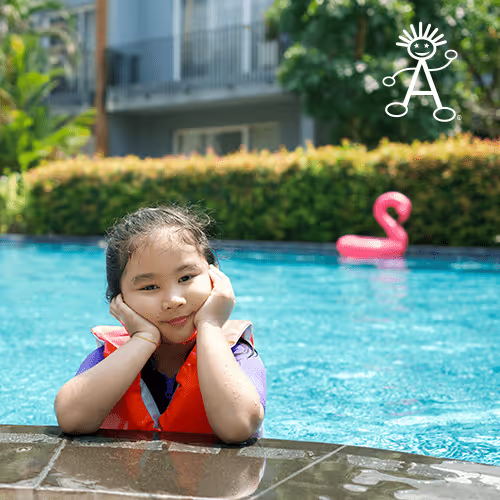
Follow these safety tips for children with autism and enjoy the Summer!
Warmer weather, pool parties, new smells, and sounds make summer the favorite season for many families. However, new routines, unfamiliar sounds, smells, and activities can also pose a challenge for the safety of children with autism. ACES is here to bring some positive safety tips to help your family have a safe, fun summer.
Water is the number one safety concern over the summer, both for neurotypical and neurodiverse children. However, statistics show that children with autism have an increased risk of drowning due to many factors -including a tendency to elope.
Here's What You Can Do To Protect Your Child
Practical ways to be hyper aware of where your child is during the summer break distractions and busy days if there's a pool in your home or neighborhood.

Swim Classes for Children with Autism
Learning to swim dramatically reduces the risk of drowning. Find specialized swimming classes in your area; many programs offer scholarships for adaptive swimming lessons through autism non-profit organizations.
Physical Barriers
Fences and safety gates are a must around swimming pools and jacuzzies. Indoor spaces should also be secured to prevent the child from wandering out. Remember that if your child tends to elope, their risk goes beyond your home's premises. Install deadbolt locks on doors, sliding doors, and windows.
Behavioral Barriers
Teach your child preventive behaviors such as always asking for a grown-up when they want to go swimming and wearing flotation devices around open bodies of water. Your ABA therapist may be able to assist, by helping identify risky behaviors and replacing them with safer ones.
Adult Supervision
Days at the beach, picnics at the lake, and visits to the local swimming pool require close monitoring for every child in your group. Maintain a high adult per child ratio. Give an adult the role of "designated watcher" for your child with autism, and never leave supervision in the hands of another child.
Know the Risky Spots in Your Area
Is there a lake nearby? A neighboring house with a swimming pool? A fountain at the park? Have a family plan in place in the event of elopement and check on these spots immediately.
Use Sensory Alerts
Turn on the chime feature on your home's alarm system to beep loudly when a door or window is opened. If you already have it but are desensitized to it (you "no longer hear it"), try changing the sound every other month.
Take Advantage of GPS Technology.
Many "personal GPS" gadgets on the market and apps provide tracking functionality. Use the one that better adapts to your child's needs and habits.
Home Security System
Most home security systems can make a noise that alerts the household members that a door has opened. Take advantage of this technology to hear when you little one might open a door unexpectedly.
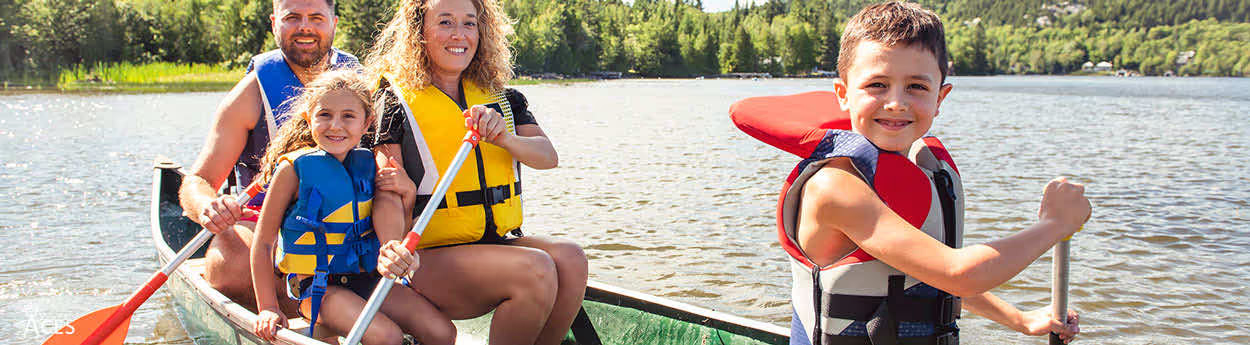
Finally, with your ABA practitioner, you can identify the triggers of risky behavior and create a new safety plan. After all, to see children enjoy the water, sun, and relax is also one of the great pleasures of summer!
Related posts



Expert Insights for Families
Receive trusted information, practical guidance, and the latest resources from our clinical team.