

Simple Steps to Better Sleep
TABLA DE CONTENIDO



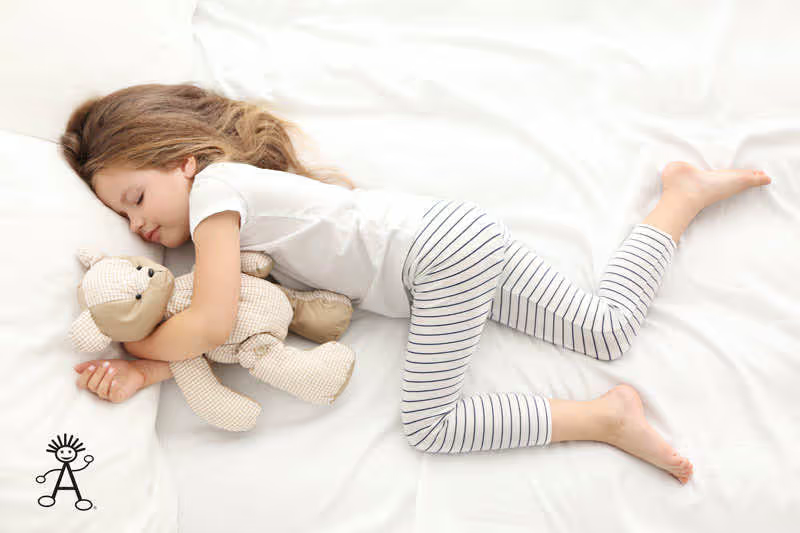
Basic Sleep Needs per 24 Hour
1-12 Months: 14 - 16 hours (including naps)
1-3 Years: 12 - 14 hours (including naps)
3-6 Years: 10 - 12 hours (naps typically fade between age 3 and 5 years)
7-12 Years: 10 - 11 hours
12-18 Years: 8 - 9 hours
Control Stimulating Factors
- Eliminate screen exposure such TV, iPad, and videos 1-2 hours before bed time.
- Eliminate stimulating sensory input such as jumping and "crashing" 1-2 hours before bed time.
- Eliminate foods that may contain hidden caffeine or sugar such as chocolate milk, juice, Gluten-Free processed products (which often have a high added sugar content), tea, etc. 1-2 hours before bed time.
Create a Consistent Bed Time Routine
Whatever routine you choose, stick to it. Every night!
Select only calming activities for the bed time routine. These activities may include bath/shower, books, puzzles, drawing, rocking/swaying, etc.
Make sure that the entire bed time routine takes place in the same room the child will go to sleep (bedroom). The goal in this is to create a "sleep message" that tells your child that bedtime is approaching.
Think about the "sleep messages" you want to send your child. Calm, quite, restful, comfortable, predictable, successful!A sample bedtime routine:
- 6:30 - Dinner
- 7:00 - Bath
- 7:15 - Quiet play (blocks, puzzles)
- 7:30 - Read books
- 7:45 - Calming routine (relaxing strategies, avoid active sensory events)
- 8:00 - Lights out

Need Help Getting Your Child to Sleep?
We're Here for You. Start Services
Control the Sleeping Environment
- Ensure a sleeping environment that doesn't change after your child has fallen asleep. For example, if you are lying down with your child to help them fall asleep, they will expect that you will be there when they open their eyes during light phases of sleep. If you are not there, they will come looking for you. Making this change (falling asleep unassisted) will require a formal sleep training program*.
- Additionally, be sure your child falls asleep in the same place they are expected to wake up. Do not have your child fall asleep in a parent's bed or on the couch, and be transferred to their bed after they are asleep. They will expect that their environment will be the same when they open their eyes during light phases of sleep. If they are not in the same place, they will come looking for you to help them fall back to sleep under those prior conditions. Making this change (falling asleep unassisted, in the same place [bed]) will require a formal sleep training program*.
- Your child's sleeping environment should be free of distractions (toys, TV, games, light, loud noise, etc.). Having toys around may create a temptation to play during night hours when your child opens their eyes during light phases of sleep.
Need Additional Help?
Need Additional Help? If you are currently receiving services speak with your supervisor or sign-up today!
Research
Cortesi, F., MD, et. al. (2012). Controlled-release melatonin, singly combined with cognitive behavioral therapy, for persistent insomnia and children with autism spectrum disorder: a randomized placebo-controlled trial. Journal of Sleep Research, 6, pp. 700-709.
Mindell, Jodi A., PhD, et. al. (2006). Behavioral Treatment of Bedtime Problems and Night Wakings in Infants and Young Children. An American Academy of Sleep Medicine Review, 29, pp. 1263-1276.
Tordjman, Sylvie, et. al. (2005). Nocturnal excretion of 6-sulphatoxymelatonin in children and adolescents with autistic disorder. Biological Psychiatry, 57(2), pp.134-138.
Resources
http://sleepyplanet.com/
http://www.parenting.org/article/i-love-you-now-go-to-sleep
Publicaciones relacionadas

Perspectivas de expertos para familias
Reciba información confiable, orientación práctica y los recursos más recientes de nuestro equipo clínico.