

Carol Gray’s Social Stories
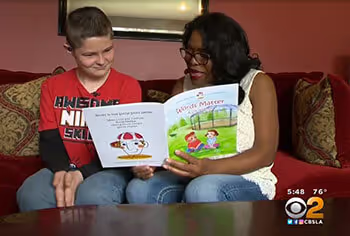
TABLA DE CONTENIDO



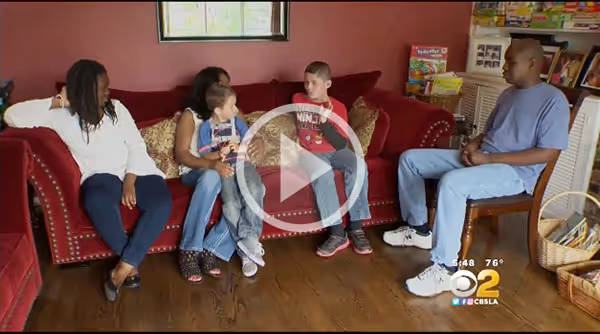
Why do we hug or kiss some people when greeting them and only shake hands with others? Why don’t you sit right next to a stranger in a movie theater when the theater is not full? Why is it okay to run and yell in a park, but not in a library?There are literally millions of social rules we have learned throughout our lives that help to guide our behavior and help us to understand the world around us based on who we are interacting with, where we are, and our culture. We retrieve past experiences in order to make judgments about what social behaviors are appropriate and we make many of these judgments within seconds without thinking about them.Many of our social rules make no sense to individuals with ASD and our behaviors in certain situations may seem perplexing or sometimes frightening to them. In addition, we work out our social problems quickly and intuitively while individuals with ASD do this through logic and deduction which involves a different part of the brain.Carol Gray came up with the idea for Social Stories to help individuals with ASD better understand the behaviors of others and the world around them. A Social Story describes a situation, skill, or concept in terms of relevant social cues, perspectives, and common responses in a specifically defined style and format, such as a video or written story (with our without pictures). Social stories have been shown to be an established intervention after a rigorous review of research as published in the National Standards Project.Nellie Valentine, a mother of four children with ASD, creates Social Stories for her children and others. Please see her story on CBS Los Angeles website.
Publicaciones relacionadas


Perspectivas de expertos para familias
Reciba información confiable, orientación práctica y los recursos más recientes de nuestro equipo clínico.